
Colorado VINELink Release Coverage
VINE is a custody-event notification system, and VINELink is its public search and registration interface. In Colorado, the service is chiefly a channel for local detention agencies that participate and send records. A matching agency record may show the person’s custody state, the reporting facility, an identifying number, and events such as release or transfer. The precise fields and notice choices depend on what that jail supplies. Colorado has no current official county-by-county participation table, so statewide coverage must not be assumed.
The VINELink search and registration screen is the official place to select Colorado and begin a local custody check.
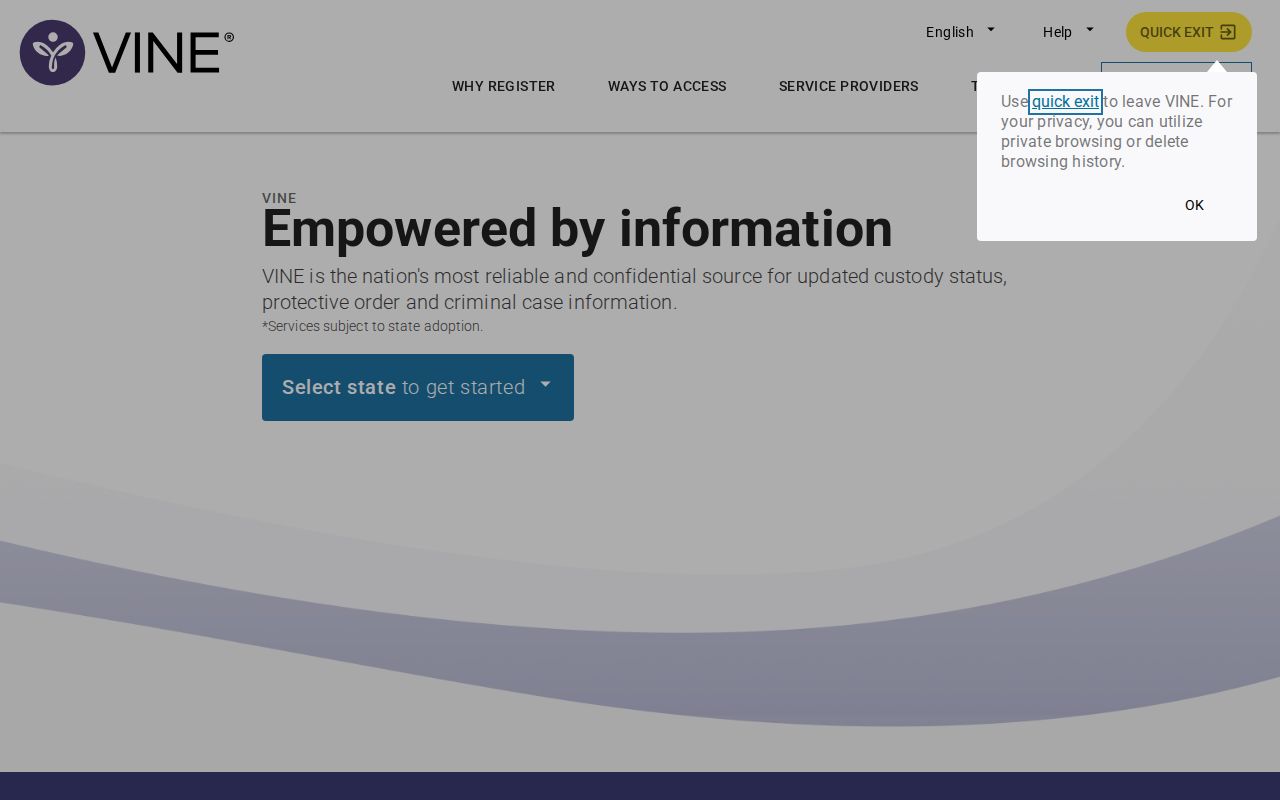
The state-selection view begins the search, but the record that follows belongs to a reporting agency. That distinction matters when the same name may appear in more than one county or custody system.
County practice is not uniform. A large county may send a searchable jail record and event notices, while a small county may hold someone only long enough to arrange transport. Regional receiving jails can also appear in records for people arrested elsewhere. When the expected county is absent, identify the physical jail that last held the person. The reporting agency on the result is more useful than assuming the arrest county still controls the record.
Release timing can create another gap. Booking systems, jail records, and notification feeds do not always update at the same moment. A person may leave the public current-custody roster before a notification is delivered, or a transfer may close one record while a new custodian begins another. The narrow fact is the event VINELink reports. The broader custody history comes from the jail’s official release action, the court disposition, or the next agency’s locator.
Important: No VINELink match is not proof of release. The jail may not participate, the event may be delayed, or the person may be in another system.
Search a Colorado VINELink Record
Begin with the custody layer, not just a name. VINELink is a sound first check when the last known event involved a county jail. A state-prison sentence calls for CDOC, and a federal sentence calls for BOP. If the county is known, the Colorado County Directory identifies the local site that can lead to the sheriff’s roster, release record, and records office. That local source is also the best fallback when VINELink has no record.
- Open VINELink, select Colorado, and choose the offender or custody search.
- Enter the full last name and first name. Add any available identifier or other field to narrow a common name.
- Compare each result by reporting agency, facility, identifier, and other displayed details. Do not choose a record from the name alone.
- Open the likely match and note the agency that supplied it. The event speaks only for that custodian.
- Read the custody event and its date. If the result reports release, confirm it with the reporting jail when timing or another hold matters.
Names can be spelled, spaced, or recorded in more than one way. A second search may use a former name, another spelling, or fewer first-name characters. If several people share the same name, the reporting facility and offender number are stronger guides than age alone. Stop when the details conflict. A false match can turn a valid custody event into the wrong person’s release claim.
Note: VINELink is a person-specific custody check, not an alphabetized list of everyone released from every Colorado jail.
Read Colorado Release Events
A VINELink result should be read as a report from the named agency at a point in time. “Released” ordinarily means that agency ended its custody record. It does not by itself say why custody ended. Bond, dismissal, time served, transfer, a court order, or movement to another custodian can produce different legal outcomes. Nor does a local release event show whether probation, parole, a detainer, or another case remains.
| Field or event | What it can establish |
|---|---|
| Reporting agency | The jail or other participating body that supplied the record. |
| Custody status | The state reported by that agency, such as in custody or released. |
| Facility or location | The reported place of custody, when the agency shares it. |
| Offender identifier | A number that helps distinguish people with the same or similar names. |
| Event and date | A release, transfer, or other recorded custody change and its reported timing. |
| Notification choices | The phone, email, or text options made available for that record. |
Scheduled information is not the same as a completed event. Court action, processing work, a transport hold, or a new warrant can change the result. For an authoritative release record, ask the sheriff or jail for the official action, including the release date and type. Under Colorado’s criminal-justice-records law, pretrial and posttrial release from custody are named forms of official action, though that does not make the entire jail file open.
Register Colorado Release Alerts
Registration attaches a notice request to the selected record. It does not change custody and does not reserve a release time. Available channels vary with the interface and reporting agency. VINELink may offer phone, email, or text, and some records may expose fewer options. Use contact details that can receive the alert, then keep the confirmation information in a safe place.
- Open the correct matched record and select “Register for Notifications.”
- Choose the offered event types, such as release, transfer, or another custody change.
- Select the available phone, email, or text channel and provide accurate contact information.
- Complete the verification step. If the channel uses a PIN, create or retain it as directed.
- Save the confirmation and return to the same record if contact details need to change.
An alert is a prompt to verify, not an official release certificate. If a call or message reports release, note the reporting agency and event time, then contact that agency if another hold or transfer is possible. VINELink support is available at 1-866-277-7477 at all times, with multilingual operator help. The service also warns that accuracy, completeness, and timing are not guaranteed.
Note: Never rely on a missed alert as proof that custody continued or ended; contact the agency tied to the matched record.
Colorado’s Two Notification Tracks
Colorado uses a distinctive split system. Official state budget materials say CDOC does not feed state-prison custody status into Colorado VINE. CDOC instead maintains its own victim-notification system, described in state documents as capable of more than eighty kinds of notice. Thus VINELink can be the right alert channel for a participating county jail while being the wrong source for a person serving a Colorado state-prison sentence.
The Colorado Department of Corrections site is the state-prison starting point for CDOC services and notification routing.
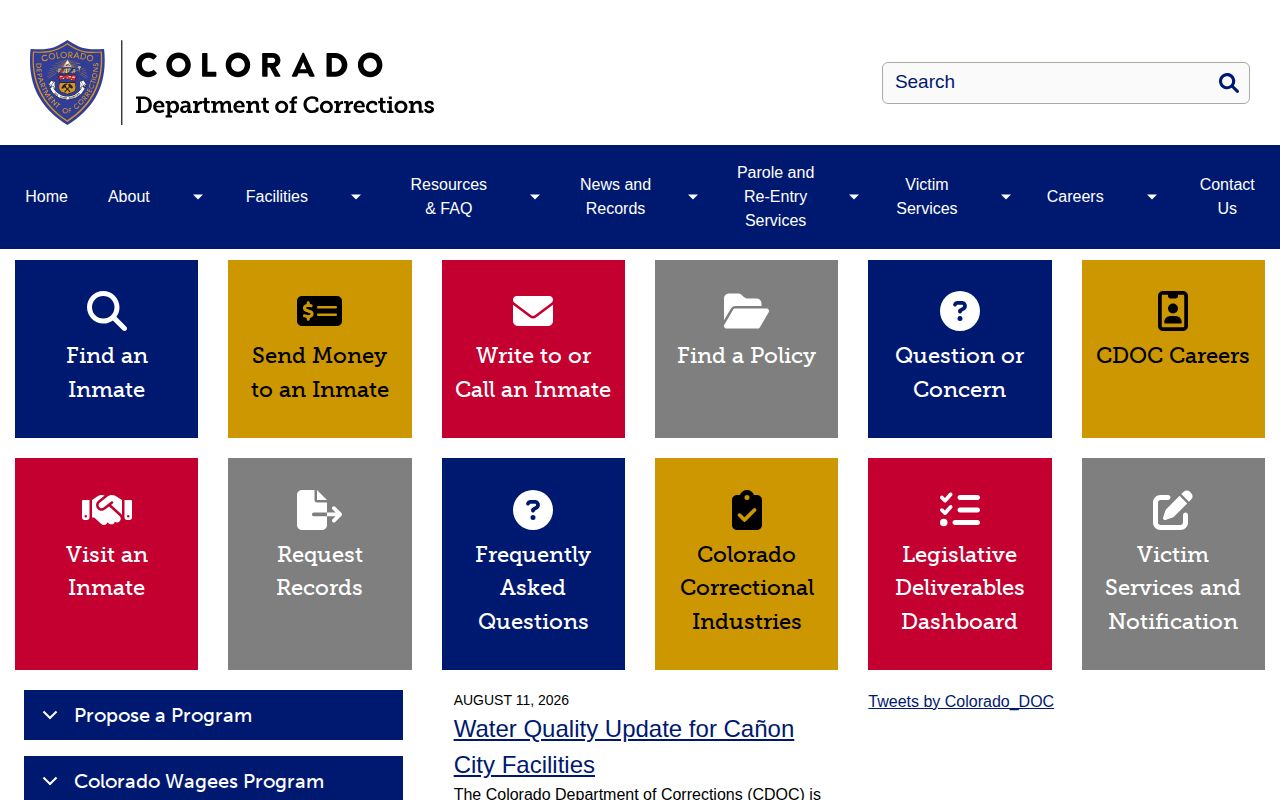
The agency page marks the separate state-corrections track. For a released prisoner, the public offender search may show a parole-region assignment, which means prison custody ended while CDOC parole jurisdiction continues.
Youth records also split by legal status. Colorado’s Division of Youth Services uses VINE for detained youth, while committed youth follow a separate DYS notification program. Adult county jail, adult state prison, detained youth, and committed youth should not be merged into one supposed statewide feed. The correct track follows the custodian and the person’s legal placement.
Confirm Colorado Prison Release
A person who entered CDOC jurisdiction should be checked through the CDOC Offender Search, not treated as missing because VINELink is blank. The live form accepts a DOC number, last name, first name, and gender. A DOC number is the best discriminator when known. Search Tips says a name search works by prefix, two last names should be run together without a hyphen, and the recorded name may be the one used during arrest or prosecution.
The CDOC Offender Search result can display Current Facility Assignment and Colorado’s three estimated date labels.
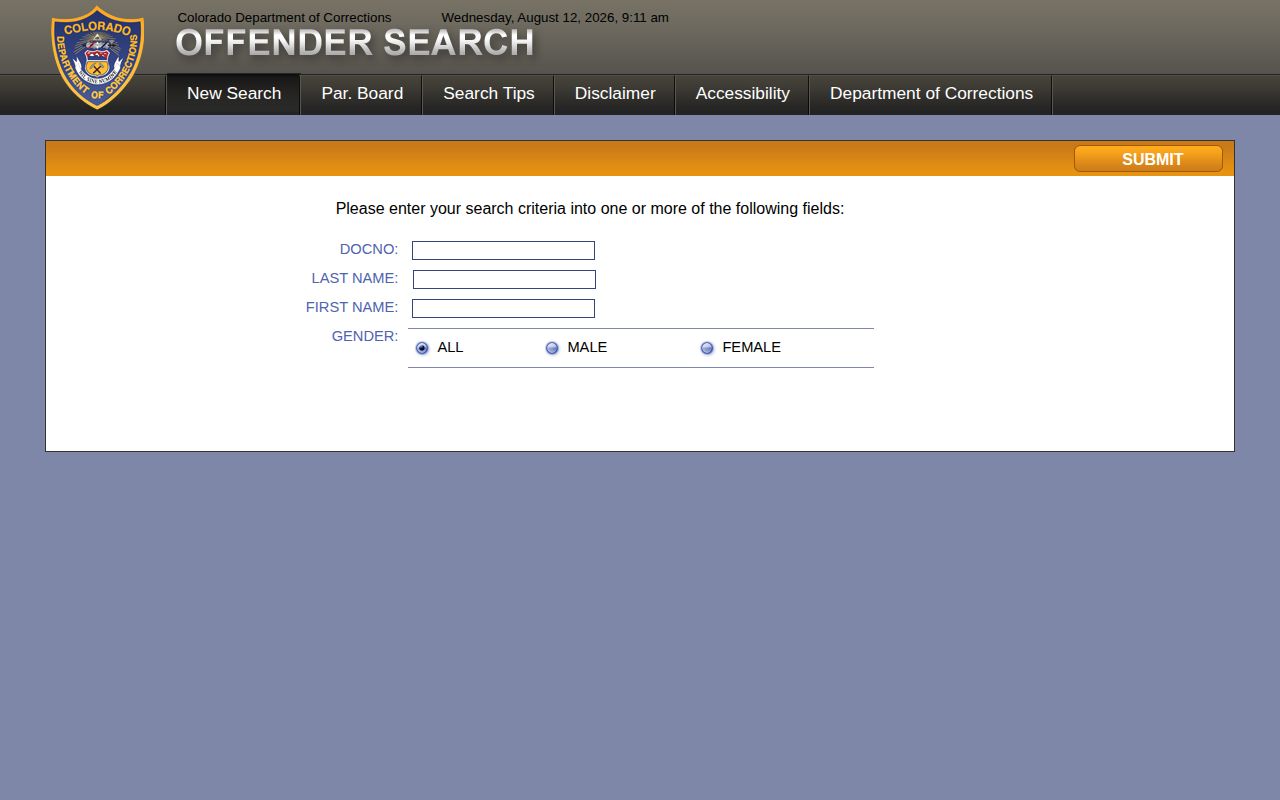
A parole-region assignment is evidence that prison custody ended and parole supervision continues. Est. Parole Eligibility Date, Est. Mandatory Release Date, and Est. Sentence Discharge Date are different milestones, and none should be renamed as a guaranteed actual release date.
CDOC has not published a dependable retention period for every fully discharged public profile. It also has not verified one universal post-discharge status label. A blank CDOC result therefore needs a name-variant search and, when necessary, a narrow records request or court check. The detailed CDOC offender search page explains the release fields and record-request route.
A narrow CDOC request can ask for the identifiable person’s public time-computation and release information, including actual prison-release date and type, parole-effective date when applicable, MRD, SDD, and public disposition data. Full name, aliases, DOC number, a useful date range, and a request for electronic delivery help define the record. Medical material follows a separate authorization process and should not be folded into an ordinary release-record request.
Colorado Release Check Limits
VINELink is not the federal prison locator. The Bureau of Prisons maintains its own search by register number or name. BOP results may show a release date and a status such as RELEASED or Not in BOP Custody. Those terms mean federal BOP custody ended. They do not rule out state custody, another jurisdiction, parole, or supervised release. BOP records cover people released after 1982 and normally update daily, though sentence recalculation can make a projected date temporarily stale.
The BOP Inmate Locator is the proper search for a Colorado federal-prison case.
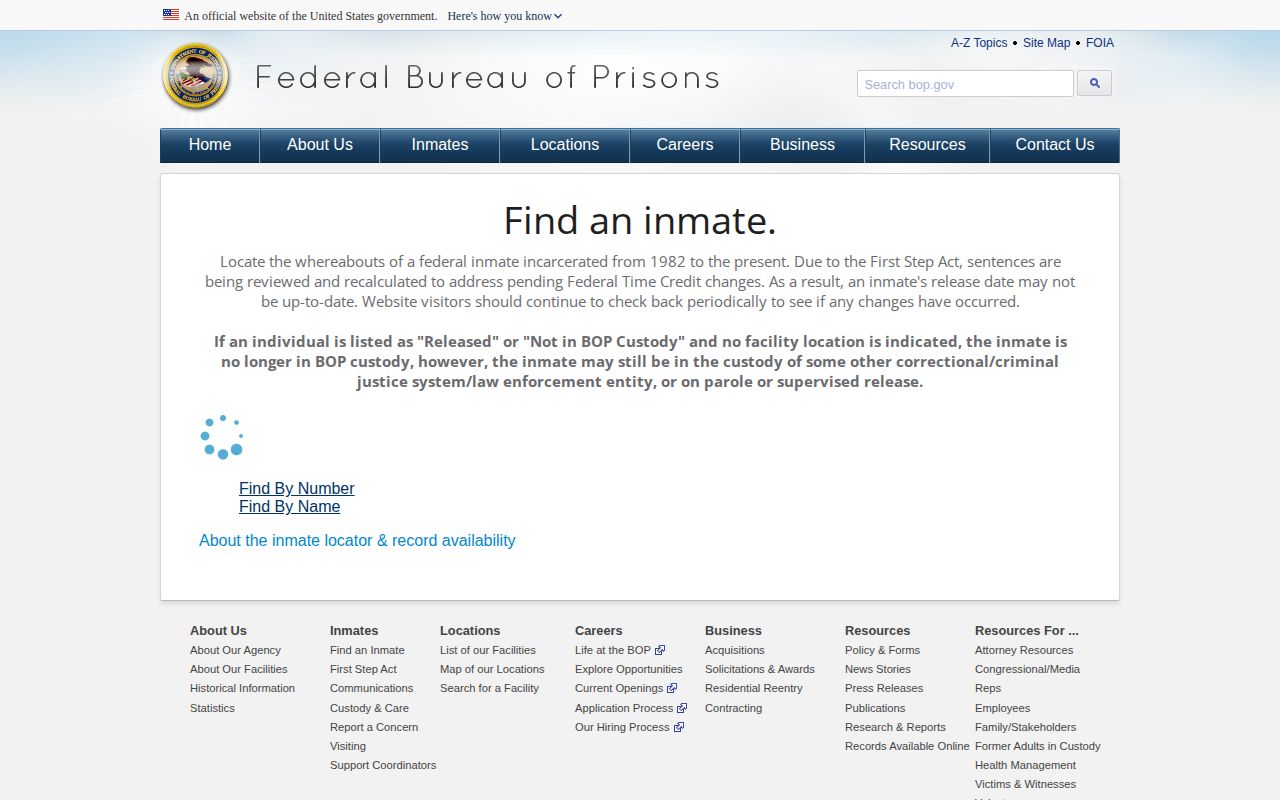
The federal search sits outside Colorado VINE and CDOC. Its result must be interpreted only as a statement about BOP custody.
Immigration detention is separate again. ICE’s Online Detainee Locator can search a person currently in ICE custody or held by CBP beyond the stated reporting threshold. A no-result is not historical proof of release, removal, or transfer. DHS-VINE is a distinct notice channel for eligible victims and witnesses affected by an immigration-nexus offense, not a general substitute for the ICE locator.
- Release event
- A reporting agency’s notice that its custody ended or changed.
- Transfer
- Movement to another facility or custodian, which is not unrestricted release.
- Parole
- Release from prison followed by CDOC community supervision.
- Detainer
- A request or legal basis that may lead to custody by another authority.
Confirm the source: A local VINE event, CDOC profile, BOP status, and ICE result each describe a different custody system.
The safest conclusion stays narrow. Identify who reported the event, record the date and status, and confirm with that custodian if the result is disputed or time-sensitive. A person can be released by one agency and still face supervision, another hold, or transfer. That is why one blank screen cannot settle a statewide Colorado release search.