
Colorado Release Date Labels
CDOC does not present one field called “Projected Release Date.” Its public profile instead separates three estimated milestones. PED is the estimated parole eligibility date. It is usually the first point at which the governing law lets the Colorado State Board of Parole consider discretionary release. Eligibility is not approval. MRD is the estimated mandatory release date, a sentence-computation point based on the governing maximum term, presentence credit, earned time, and the law that applies to the case. SDD is the estimated sentence discharge date. That is the projected end of the governing sentence or jurisdiction, not always the day a person walks out of a prison.
The distinction matters. Parole ends physical prison custody but begins community supervision. A sentence discharge may occur later, or it may occur while a person is confined after a parole violation. Transfers to another jurisdiction, a detainer, community corrections, intensive supervision, or a hospital can also change what “release” looks like. None of the three estimated dates alone proves an actual gate event.
The CDOC Offender Search shows these labels together on a public result.
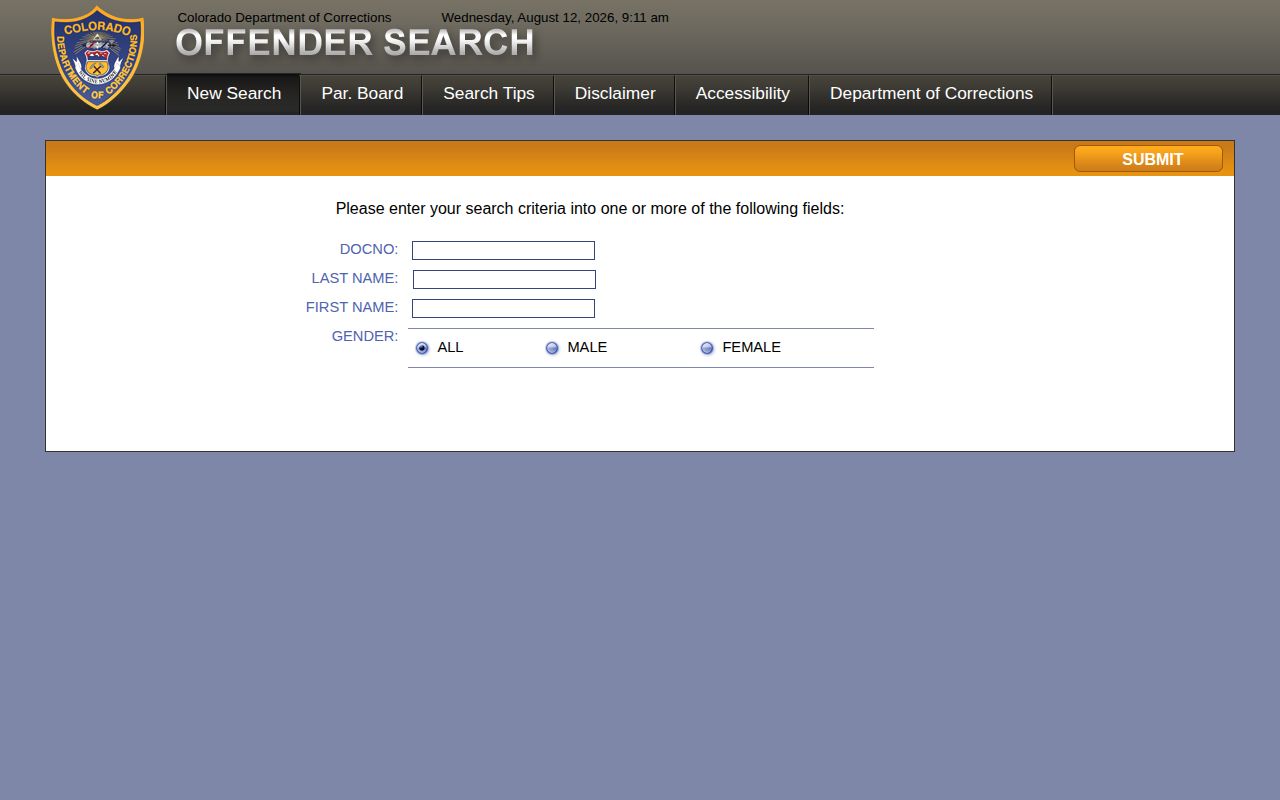
The result pairs PED, MRD, and SDD with the current facility assignment, which helps separate a prison placement from a parole-region assignment.
Find Colorado Projected Release Dates
Start with custody scope. CDOC is the right system for a Colorado state-prison sentence, a release from prison to parole, a parole return, or eventual sentence discharge. It is not the main source for someone who left a county jail after bond, dismissal, time served, or a county sentence. A federal sentence belongs to the Bureau of Prisons. Local custody belongs to the releasing sheriff, the sentencing court, and sometimes Colorado VINE.
Use the public search in this order:
- Enter the six-digit-or-shorter numeric DOC number when known. It distinguishes records better than a common name.
- Otherwise, search the last name. Add the first name and gender only when the first result set is too broad.
- Compare the DOC number, name, photo, physical details, and conviction rows before choosing a record.
- Read Current Facility Assignment. A prison name signals a prison assignment, while a parole-region label signals release from prison with supervision still active.
- Read PED, MRD, and SDD separately. Check the next Parole Board hearing date when the field appears.
- Request the public time-computation or release record from CDOC if the estimate is contested or the actual release event is needed.
Colorado Projected Release Search Tips
The official CDOC Search Tips explains the form’s name-matching rules.
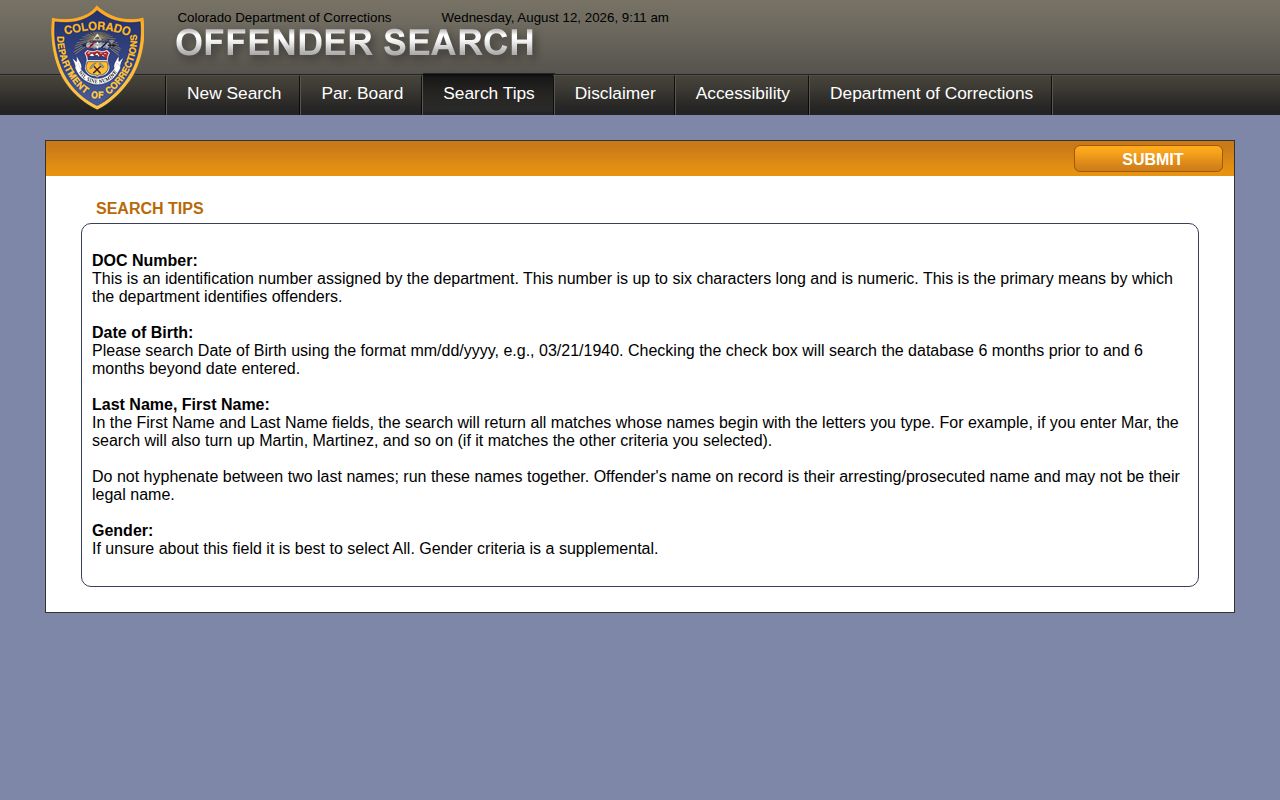
Names match from the beginning of the entered text, two last names should be joined without a hyphen, and the record may use the name given at arrest rather than a later name.
For a fuller walkthrough of the search fields and parole assignments, use the CDOC offender search page. A county sentence must instead be checked with the local jail records unit or court because CDOC cannot calculate a term it does not control.
Colorado Release Date Computation
CDOC’s FY 2024 statistical report describes PED as generally based on half of the maximum governing sentence, less court-awarded presentence confinement and any earned time allowed by law. MRD is generally based on the full maximum governing sentence, less presentence confinement and authorized earned time. The governing sentence is the one that produces the operative MRD or SDD. That sentence can change when a new conviction, a consecutive term, a parole revocation, or a remaining parole period alters the legal structure.
| CDOC label | What it marks | What it does not prove |
|---|---|---|
| PED | Estimated first parole eligibility point under the applicable law | A hearing grant or a release date |
| MRD | Estimated mandatory sentence-computation milestone | Release free of a hold or later supervision |
| SDD | Estimated end of the governing sentence or jurisdiction | A same-day exit from a prison building |
Pretrial detention works differently. A person awaiting trial has no sentence term from which CDOC could compute PED, MRD, or SDD. Bond, dismissal, a plea, sentencing, another hold, or a transfer may end or extend that jail stay. Ask the local jail and court about the current order. Do not convert a hearing date or bond setting into a projected release date.
The Colorado Department of Corrections home page is the main official route into agency services and parole resources.
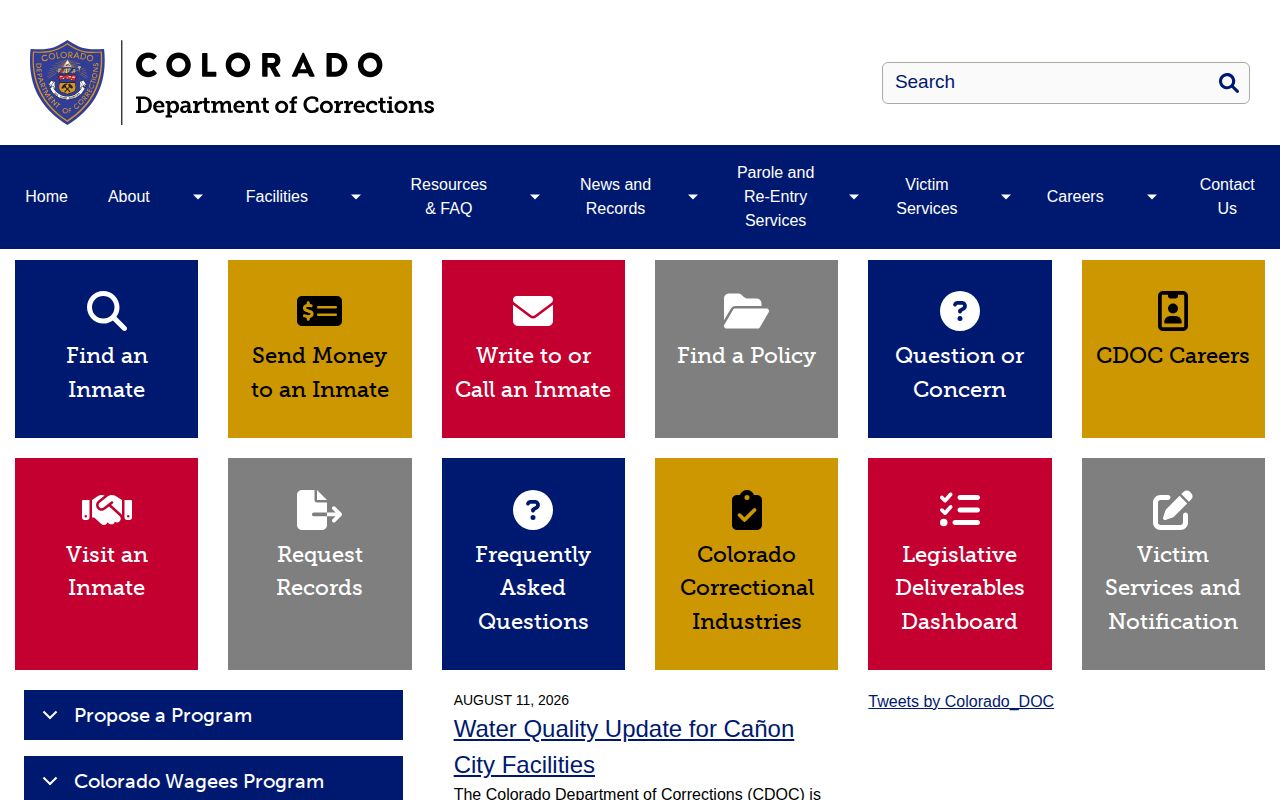
That agency route is useful when a search result needs to be checked against current CDOC contacts, records services, or policy material.
Colorado Release Eligibility Cohorts
Colorado is not simply a “50 percent state” or an “85 percent state.” C.R.S. § 17-22.5-403 supplies a general Part 4 parole-eligibility rule based on half of the sentence, less authorized earned time, and also permits an extension for misconduct. Yet offense date, offense class, prior convictions, crime-of-violence provisions, indeterminate sentences, sexual-offense rules, and other statutes create significant exceptions. The person’s sentence cohort, meaning the group governed by the same version of the law, controls the calculation.
Proposition 128 changed specified crimes committed on or after January 1, 2025. Its framework includes an 85 percent threshold for listed violent offenses and full-sentence treatment before parole for a third qualifying crime of violence. It does not convert every Colorado sentence to an 85 percent rule. The displayed estimates and an official computation for the named person remain more reliable than a broad percentage.
- Presentence confinement
- Time credited by the court for qualifying custody before the prison sentence began.
- Governing sentence
- The sentence structure that produces the operative mandatory release or discharge date.
- Consecutive sentence
- A term ordered to run after another term rather than at the same time.
- Detainer
- A request or hold from another authority that can affect where a person goes after one custody term ends.
Note: A percentage estimate cannot account for every sentence order, credit, violation, hold, or later correction in an individual CDOC computation.
Colorado Earned-Time Release Policy
Earned time under C.R.S. § 17-22.5-405 depends on statutory eligibility and recorded conduct or progress. It is not a credit that every person receives at one fixed rate. Older sentence cohorts can also involve §§ 17-22.5-301 and 302. Title 17 identifies areas such as work or training, group living, counseling, correctional-program progress, parole compliance, education, and qualifying achievements. An award can shorten a computed milestone, while a withheld or lost award can leave the date later.
SB 26-159 became law on May 19, 2026. Its enacted summary raised certain monthly rates from 12 to 14 days for eligible lower-level offenders and from 10 to 12 days for people serving, or previously convicted of, specified higher-level offenses. A qualifying behavioral-health milestone or phase may add up to 150 days. Eligibility still depends on the signed law, offense category, CDOC policy, conduct, and program compliance. It would be wrong to say every inmate now earns 14 days each month.
| Factor | Possible date effect | Verification source |
|---|---|---|
| Presentence credit | Reduces the applicable calculation when awarded by the court | Sentencing order and CDOC computation |
| Earned-time award | May move an eligible estimate earlier | CDOC time record |
| Misconduct or lost credit | May delay eligibility or an estimated date | CDOC computation and lawful disposition |
| New or consecutive sentence | Can change which sentence governs | Court orders and CDOC record |
| Parole grant or revocation | Can change prison exit and later discharge timing | Board disposition and CDOC profile |
| Detainer or transfer | May change the destination without ending all custody | Holding agency and release record |
Verify Colorado Release Estimates
A public result is a strong navigation aid, but it is not an official promise. The current assignment and estimated fields can change after a court order, a credit decision, discipline, a parole action, or a corrected sentence computation. A blank result is also inconclusive because CDOC has not published a reliable retention period for fully discharged profiles. Search name variants, check the responsible court, and ask CDOC for the narrow public record when needed.
The CDOC search disclaimer warns that its database may contain inaccurate information.
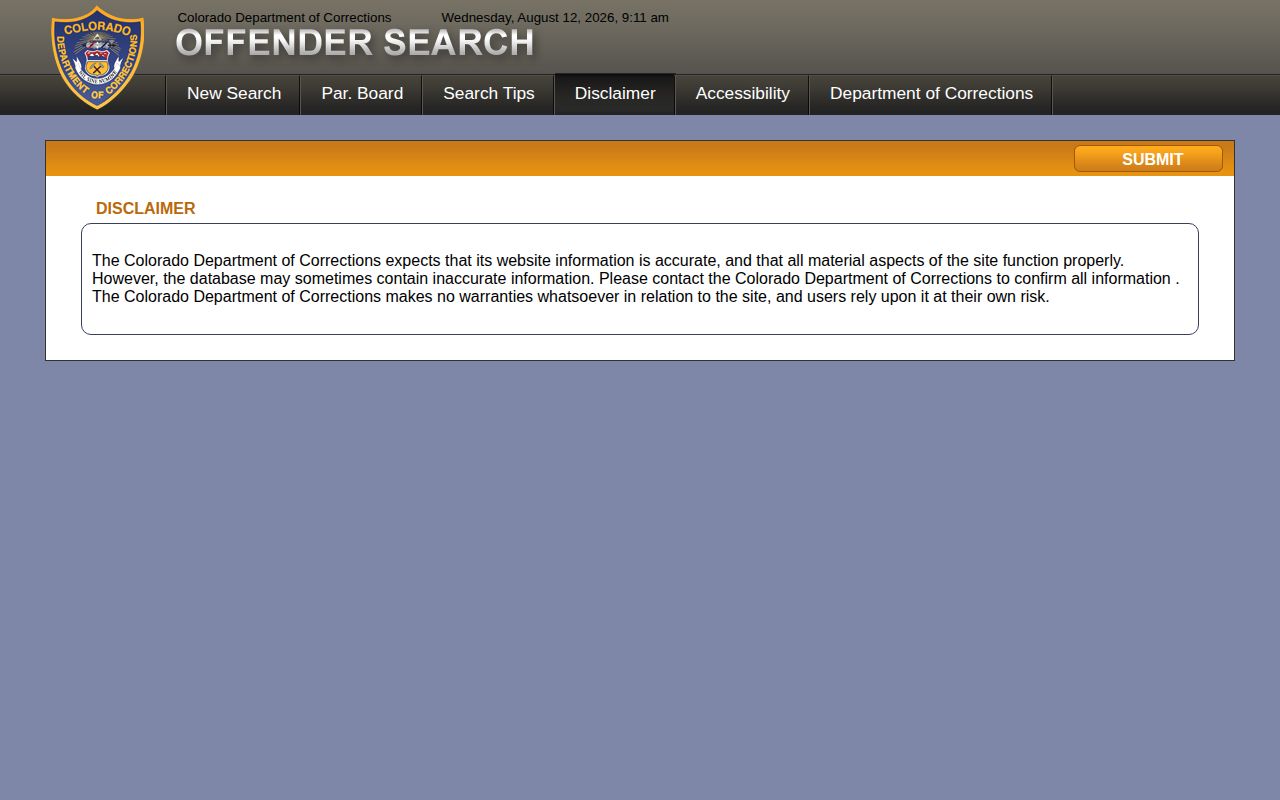
That warning is why an estimate should be paired with the agency record that created it, especially when the date has legal consequences.
Request Colorado Release Date Records
Colorado’s official service accepts a focused request for the identifiable person’s public time-computation and release information. Ask for the actual prison-release date and type, parole-effective date if applicable, MRD, SDD, and public disposition information. Include the full name, aliases, DOC number, a useful date range, and a preferred electronic format. Medical records follow a separate authorization process.
The CDOC records-request service is the current public route for that request.
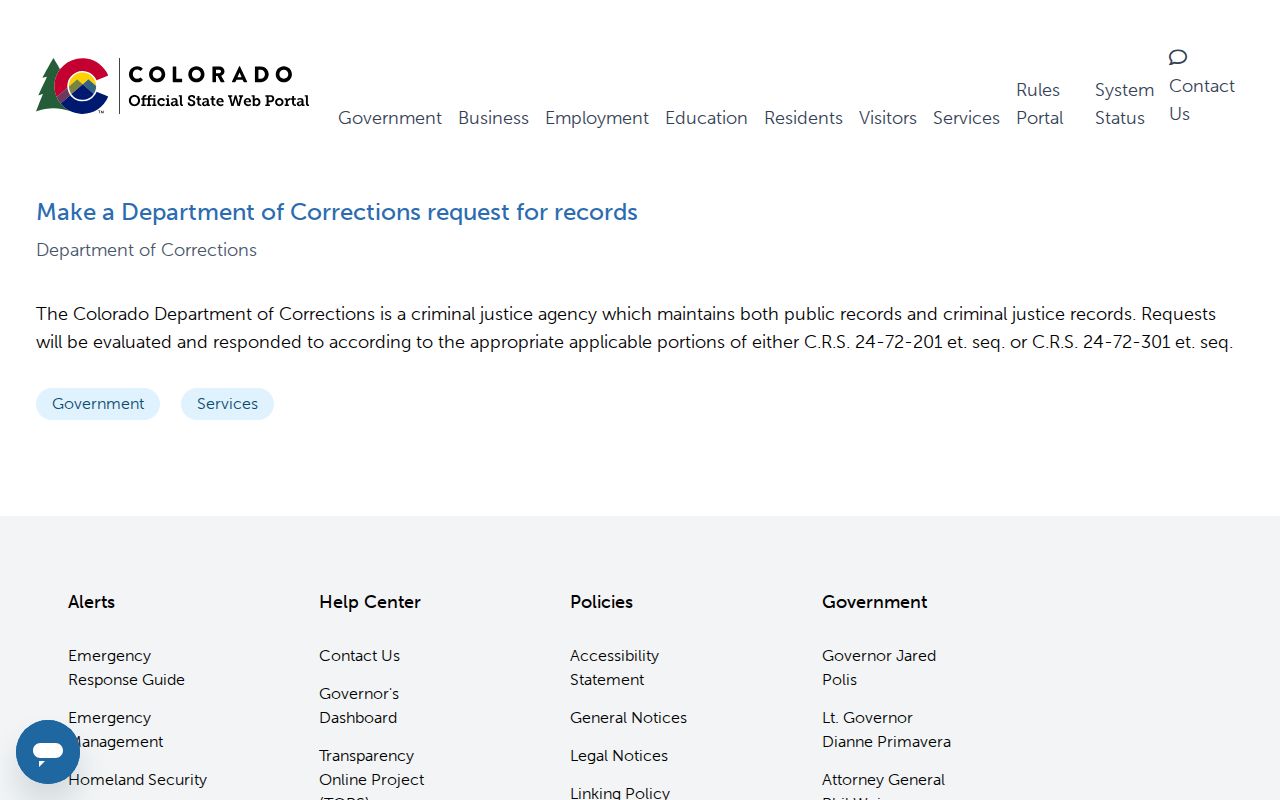
A narrow request helps CDOC identify the calculation or release action without implying that an entire corrections file is public.
Note: Ask for PED, MRD, SDD, and the actual release action by their exact Colorado labels in any records request.
Colorado Release Changes in 2027
HB 26-1256 creates a clear current-versus-future line. As of the August 12, 2026 research date, its discharge-allowance changes were not yet in effect. Beginning January 1, 2027, the act requires at least a $100 discharge allowance free of deductions, revises identity-document procedures, and replaces the older ticket-to-leave framework. Annual reporting on releases, allowances, and identity documents begins September 15, 2027.
The prior statutory framework provided suitable clothing and allowed state-paid transportation from a correctional facility to a Colorado residence or another Colorado location, but applicability can depend on the sentence cohort. Neither the old provision nor the future act should be turned into a universal promise about what a particular person will receive. Release-day support also does not alter PED, MRD, or SDD. Those are sentence milestones; the allowance and document rules concern the transition when a qualifying release takes place.
Timing still must be confirmed close to the expected event. A Board action may affect a discretionary release, and a detainer can change the destination even when CDOC’s prison term reaches a milestone. The Colorado parole hearings calendar can help verify whether a pending Board event is part of the date question.
Colorado Release Timing Systems
CDOC’s FY 2024 report also warns against tying every release to a prison’s front gate. People often pass through transport hubs, so the agency does not attribute its release totals to individual prisons. A current facility name identifies the assignment at the time of the profile. It does not promise that the same site will process the later departure. Ask for the actual prison-release location or type only when that detail is needed and publicly available.
Different event types can change the date in different ways. An application hearing considers discretionary release after PED and before MRD. A rescission hearing reviews a date that was already granted when a later issue may justify revising it. A revocation hearing concerns an alleged parole violation after prison release and may return the person to custody. Those events should be read with the Board disposition, not guessed from a date shift on the profile.
Federal and county estimates remain separate. The Bureau of Prisons can display a future federal release date, while a local court or jail computes a county sentence. A BOP “Released” result only ends BOP custody, and a local roster disappearance may mean bond, dismissal, transfer, or another hold. Neither should be copied into a CDOC date record.
Note: Always match a projected date to the agency and sentence that produced the calculation.