
Colorado Parole Versus Probation
Parole is the supervised part of a Colorado state-prison sentence after physical prison custody ends. The Colorado State Board of Parole decides discretionary release, sets conditions, and handles later Board matters. The Division of Adult Parole carries out community supervision. Probation is different. A judge orders it in a criminal case, and Colorado Judicial administers it through judicial-district probation departments. A person may receive probation without serving a CDOC prison term.
| Point | Parole | Probation |
|---|---|---|
| Source | State-prison sentence and parole law | Court order in a criminal case |
| Decision maker | Colorado State Board of Parole or mandatory-release framework | Sentencing court |
| Supervising system | CDOC Division of Adult Parole | Colorado Judicial probation department |
| Public starting point | CDOC Offender Search | Court disposition and county probation routing |
| End point | Discharge from parole or sentence jurisdiction | Court-ordered completion or termination |
- Parole
- Supervised release from prison while CDOC jurisdiction continues.
- Probation
- A court-ordered form of supervision that is not the same as prison parole.
- Discharge
- The legal end of the applicable supervision or sentence authority.
- Absconder
- A supervised person alleged to have left oversight or failed to report as required.
Release from one custodian is not always the end of legal control. A parole-region assignment, residential community corrections, a detainer, or a new court order can show that another status continues.
Verify Colorado Post-Release Supervision
Use the custody history to choose the first source. A state-prison release points to CDOC. A sentence to probation points to the court and the local probation department. A county jail release after bond or dismissal does not, by itself, show either form of supervision. The jail roster may no longer list the person because that roster tracks current custody rather than a past release.
- Confirm whether the person entered CDOC custody, received probation, or only left a county jail.
- For parole, search by DOC number when possible. Otherwise use last name, then narrow by first name and gender.
- Compare identifying details and read Current Facility Assignment. A parole-region assignment verifies release from prison with parole still active.
- For probation, obtain the court disposition or register of actions that shows probation was ordered.
- Use Colorado Judicial’s county or city routing tool to identify the correct district probation office.
- Ask the record-owning office to confirm information that is not public or is unclear, subject to its disclosure rules.
Colorado Parole Search Records
The CDOC Offender Search can display a parole-region assignment on a matching record.
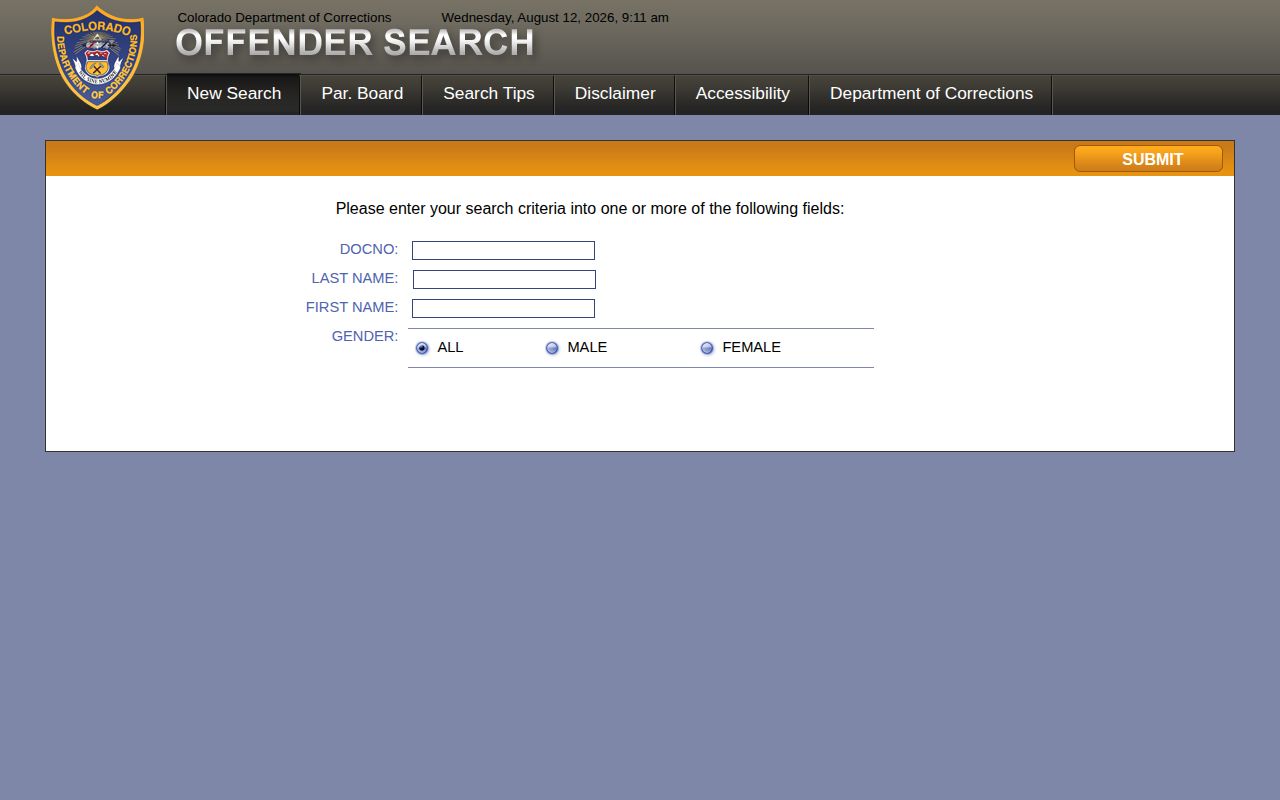
That label shows the person left prison for parole, but it does not establish that the sentence or supervision has ended.
The public profile should be matched by DOC number, photo, conviction rows, and physical details, not a name alone. If no result appears, try name variants and then use a CDOC records request. The agency does not publish a dependable retention period for every fully discharged profile, so absence from the public search is inconclusive.
Note: A parole-region assignment verifies prison release with supervision, not the final end of the sentence.
Colorado Parole Board Roles
The Colorado State Board of Parole evaluates eligible people for discretionary release, sets conditions, handles rescission matters, hears alleged violations, and reviews early-discharge requests. The Board is not the authority for a routine bond release from a county jail. An application hearing considers release after parole eligibility and before the governing term requires it. A rescission hearing reviews a release date already granted when a later concern may justify a change. A revocation hearing addresses an alleged violation after prison release and can result in reincarceration.
The Colorado State Board of Parole home page is the official statewide source for the Board’s role and public material.
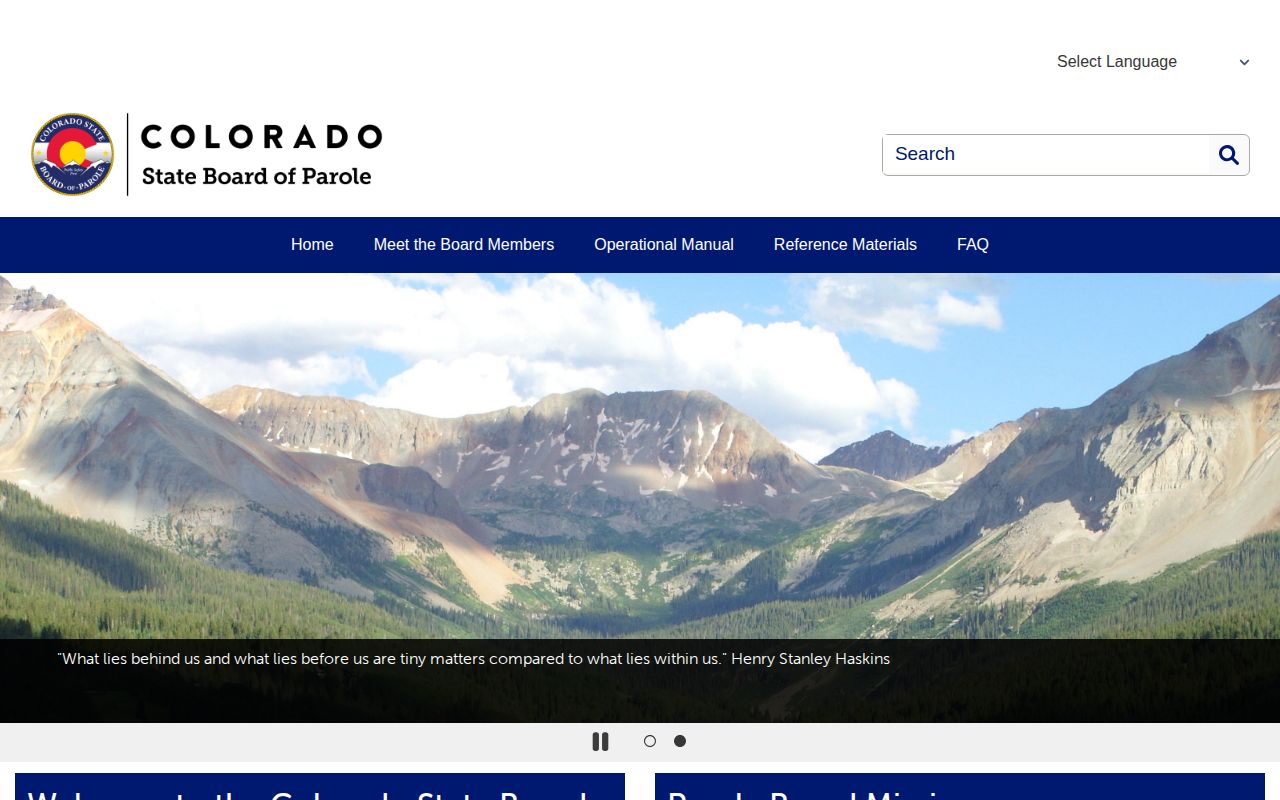
The Board’s decisions are distinct from the work of Adult Parole officers who supervise a person after release.
Reaching PED, the estimated parole eligibility date, allows consideration under the governing law. It does not compel release. A grant can lead to a release plan and parole start, while a defer or table can postpone the outcome. The separate Colorado parole hearings page covers calendar and disposition paths.
Colorado Probation Record Routing
Colorado Judicial administers adult and juvenile probation through 23 judicial districts, 24 probation departments, and more than 70 offices. There is no verified public statewide roster of people on probation. A court register or filed disposition can show that probation was ordered. The appropriate district office is then the source for current verification that it may lawfully disclose.
The official county-probation routing tool lets a reader select a county or city and reach the relevant department. That is more accurate than calling a single central office for every case. District boundaries and the sentencing court matter. A free docket entry may locate a scheduled court event, but a docket does not prove present supervision or physical custody. Request the filed order from the court when the exact term or status matters.
Statewide routing through judicial-district departments
Find County Probation
Probation may end through completion, a court order, or another lawful termination. Because it is judicial supervision, a CDOC parole record should not be treated as a substitute for the sentencing court’s probation order.
Colorado Structured Release Placements
Community corrections occupies a middle ground. A person may no longer be in a jail or prison, yet may remain in a structured residential placement or another form of legal custody. Colorado’s Office of Community Corrections says programs generally cannot disclose a client’s location to the public because of privacy limits. A missing public placement is not proof of unrestricted release.
The Colorado community corrections information explains the statewide program framework and disclosure limits.
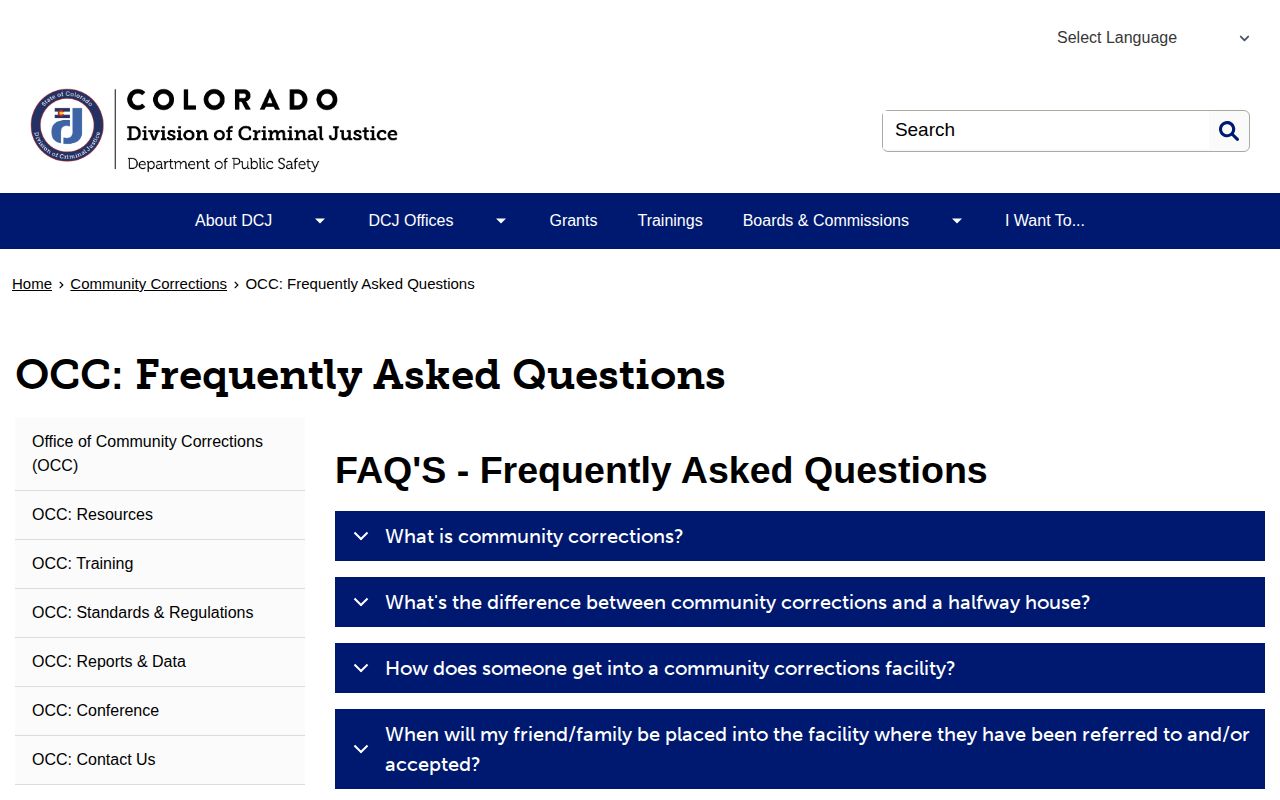
The distinction helps prevent a residential placement from being described as the end of every form of custody or supervision.
Use the CDOC assignment, Board disposition, court order, and responsible program as separate pieces. A transfer to community corrections may end a prison placement but not the underlying sentence. Likewise, a county roster disappearance could mean transfer rather than community release. Each agency can confirm only the part of the record it owns.
Note: A residential placement may remain structured legal custody even when a prison or jail assignment has ended.
Colorado Supervision Violations and Warrants
Conditions are rules attached to parole or probation. Their details come from the Board, the sentencing court, and the supervising office. A violation allegation does not describe the outcome by itself. On parole, a revocation hearing can address the claimed breach and may lead to a return to custody. On probation, the court handles the violation process. The two paths should not be merged.
CDOC’s Fugitive Information page provides a statewide tip line at 1-866-873-6305 and warns the public not to contact an escapee, absconder, or fugitive directly. An absconder label means the person is alleged to have left supervision or failed to report. A warrant is an order authorizing enforcement action. Neither term proves the final disposition of the underlying allegation.
Colorado VINE may report events for participating local jails, but CDOC does not feed its prison status into Colorado VINE. A parole warrant or return should therefore be checked through CDOC and the Board, not inferred from a missing VINELink result. County participation and event timing also vary.
Colorado Parole Reentry Services
CDOC publishes statewide service routes that relate to the transition under supervision. WAGEES grew from HB 14-1355 and funds community and faith partners that serve people returning from incarceration. Its model stresses local control and leadership informed by lived experience. The program listing is a navigation source, not proof of a person’s parole status or participation.
The WAGEES and community partners page identifies the official CDOC program route.
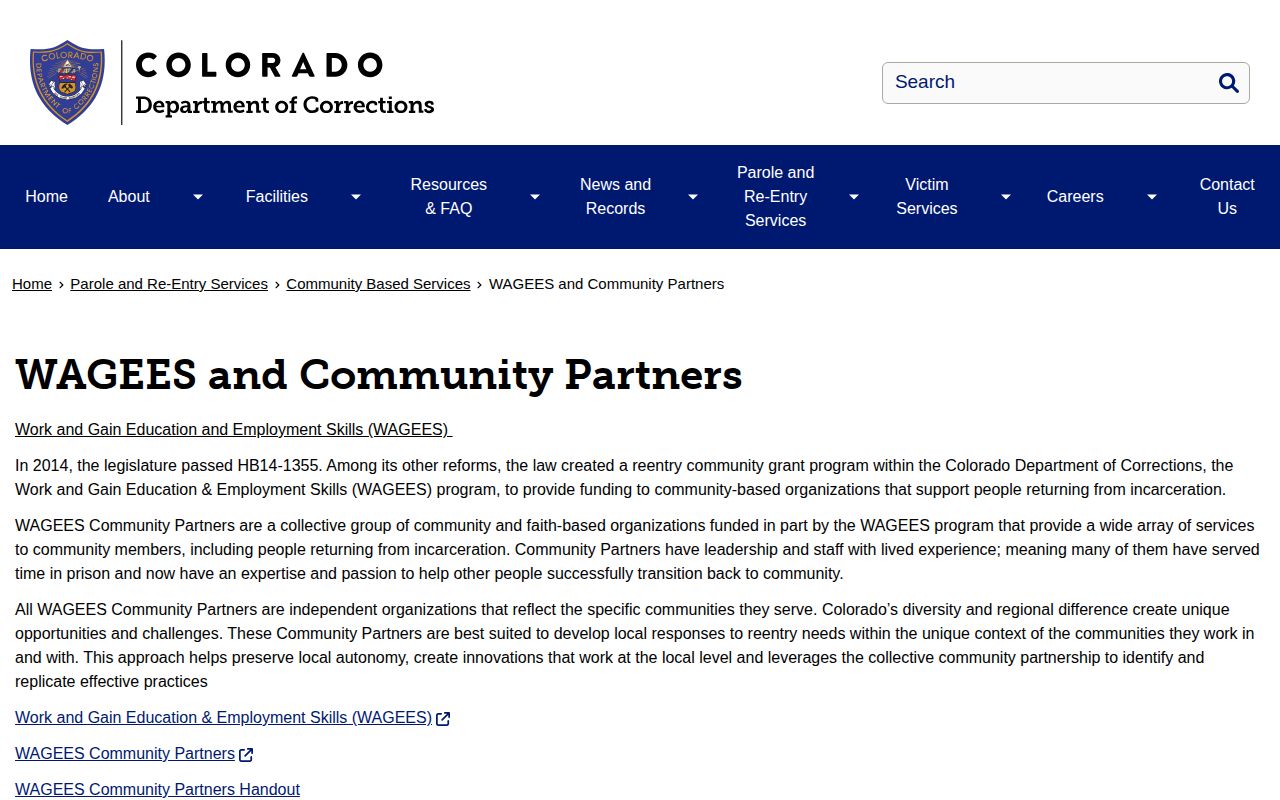
Its statewide framework still operates through local partner organizations, so availability and intake must be confirmed with the listed source.
Colorado Parole Treatment Coordination
CDOC’s Treatment Coordination Case Managers separately state a goal of arranging assessment and intake referrals within 14 days of release for qualifying people with specified treatment needs. The Client Choice Treatment Provider Program is the official route for that part of the process. It does not replace the parole record, Board order, or assigned officer.
The Client Choice Treatment Provider Program describes the CDOC treatment-coordination path.
The published goal concerns referral timing and qualifying needs, not a guarantee that every released person enters a specific service.
Colorado Parole Discharge Milestones
Prison exit, parole start, early-discharge review, and final sentence discharge are separate milestones in Colorado. A public CDOC assignment such as “Parole – Northeast Region” documents that prison custody ended and parole supervision continues. It does not show final discharge. The Board’s annual report also confirms that Adult Parole may submit early-discharge requests for review.
C.R.S. § 17-2-218 adds a timing rule for early discharge involving specified sex offenses or Victim Rights Act offenses. The law can require a 15-day victim-notice buffer before the early-discharge decision, without extending supervision past mandatory discharge. That buffer is a dated procedural safeguard, not extra sentence time that applies to every parole case.
Confirm discharge through the Board disposition, CDOC record, and the supervising authority. Ask for the identifiable public action and a clear date range. Colorado’s criminal-justice-records law treats decisions granting, ordering, or terminating parole and probation as official action, but that does not make the whole corrections or supervision file public. A focused request is both more accurate and easier for the custodian to identify.
Note: Prison exit, parole start, early discharge, and final sentence discharge can fall on different dates.
Colorado Supervision Across Custody Systems
VINELink is not a statewide parole roster. In Colorado, participating local jails send custody events to VINE, but CDOC does not feed its prison or parole status into that system. CDOC maintains a separate victim-notification program. County participation and event timing vary, and VINELink warns that its data may not be complete or current. A missing result cannot show that parole ended or that every hold was cleared.
Federal custody also has its own record. The Bureau of Prisons locator may say “Released” or “Not in BOP Custody,” which means BOP custody ended. It does not rule out another jurisdiction, federal supervised release, or a new custody event. ICE’s locator addresses current immigration detention, not Colorado parole or probation. A no-result there is not a historical release record.
Colorado courts remain the main bridge for probation. The free docket search can locate scheduled entries, while the court’s record guide routes register-of-actions searches through outside vendors and warns that those results are not the official court record. Filed orders must come from the court. Use the disposition to establish that probation was ordered, then contact the district department for current information it may disclose.
The source sequence stays narrow: CDOC for state parole, the sentencing court and judicial district for probation, the reporting jail for local custody, and the relevant federal agency for federal or immigration custody. A result from one system should not be stretched into a claim about another.