
Colorado Released Inmate Records
“Released” describes the end of one form of physical custody. It does not always mean the person has no other legal restraint. A county jail may release someone on bond, after dismissal, after a short sentence, or to another custodian. The Colorado Department of Corrections, known as CDOC, may release a state prisoner to parole. A person may also move to community corrections, a hospital, another jurisdiction, or a detainer. Each event creates a different trail. A missing jail-roster entry alone does not identify which event occurred.
Colorado release records also exist at two main levels. Sheriffs and local jails hold records for county custody. CDOC holds prison, sentence-computation, and parole records for people within state-corrections jurisdiction. Federal Bureau of Prisons and ICE systems cover their own custody. The useful first question is not simply, “Are they gone?” It is, “Which agency last held them, and what event ended that agency’s custody?”
A local booking can move through several systems. Arrest and pretrial detention may begin in a county jail. A court can then order bond, dismissal, a county sentence, probation, or commitment to CDOC. Once a state sentence begins, the CDOC number and profile become the stronger statewide identifiers. If the person later leaves prison on parole, the parole assignment can remain visible even though the old prison no longer holds the person. Keeping the custody timeline in order prevents a past roster, a future estimate, and a current assignment from being mistaken for the same fact.
The Colorado Department of Corrections home page identifies the agency behind state prison and parole records.
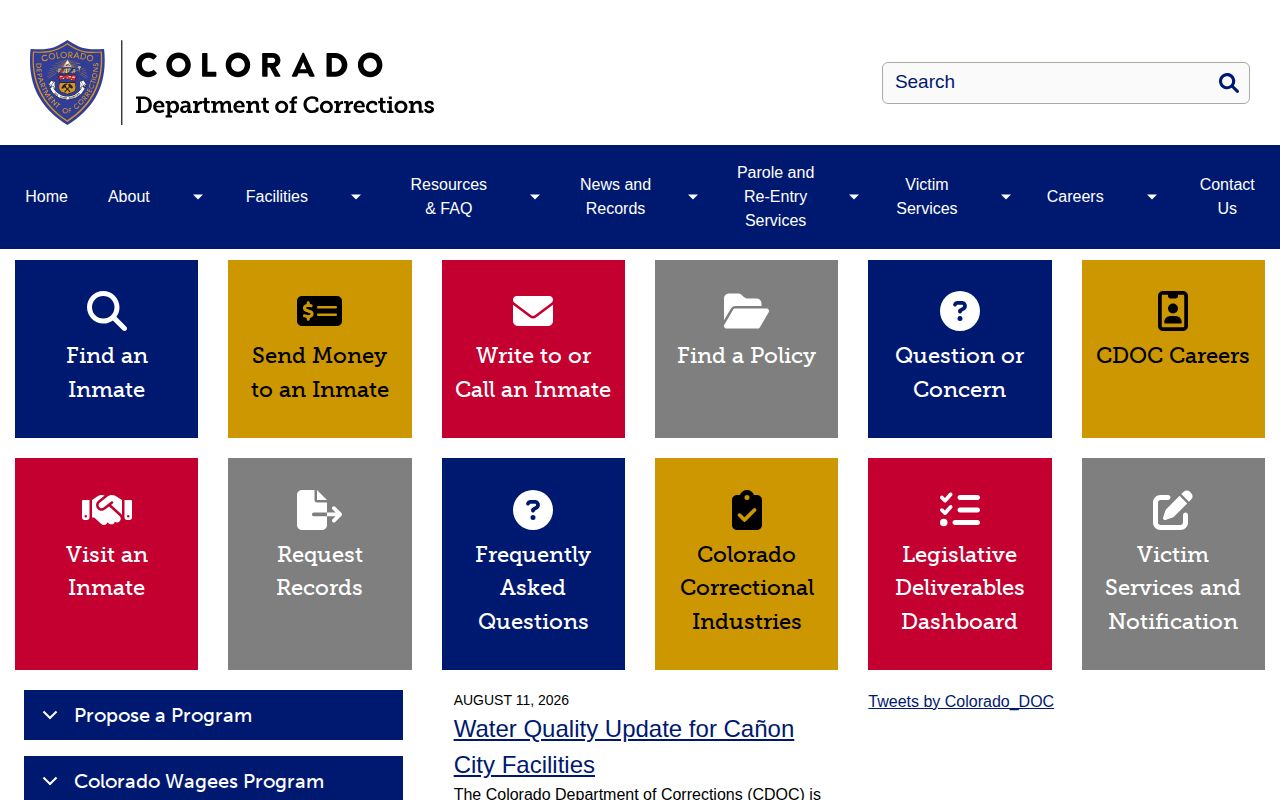
That agency source applies to state sentences and parole, not routine county-jail releases.
Colorado Inmate Release Types
Colorado uses distinct terms for distinct stages. Parole eligibility means the person may be considered for parole. It does not order an exit. Discretionary parole follows a Board decision. Mandatory release is a sentence-computation point under the law that governs the sentence. Parole ends prison custody but begins or continues community supervision. Sentence discharge concerns the end of the governing sentence and jurisdiction. It need not describe an ordinary walk through a prison gate.
| Release event | What it means | Primary record |
|---|---|---|
| Bond, dismissal, or time served | A county jail’s custody ends under a court or jail process | Releasing jail and court case |
| Parole | Prison custody ends while CDOC supervision continues | CDOC profile and parole record |
| Mandatory release | A computed statutory milestone applies | CDOC time-computation record |
| Sentence discharge | The governing sentence reaches its endpoint | CDOC discharge and court records |
| Transfer or detainer | One custodian releases the person to another | Both sending and receiving agencies |
CDOC’s statistical categories also include hospital transfers, appeal bonds, deaths, probation or court-ordered discharges, and releases to pending charges or detainers. Those labels show why “release” cannot be reduced to unrestricted return to the community. Colorado also has work-release and community-corrections settings where prison or jail custody may end while a structured residential placement remains.
Note: A release from one custodian can coexist with parole, probation, a detainer, a transfer, or another open case.
Colorado Release Record Fields
A useful Colorado release record should identify the person, the source agency, and the precise event. County fields vary because each sheriff keeps its own booking and release system. Common local records may include a booking or case number, release date, release reason, bond or court disposition, and the facility that ended custody. A CDOC profile uses different fields. It can display a DOC number, identifying traits, conviction rows, Current Facility Assignment, three estimated date labels, and a future Board hearing date when applicable.
| Field | What it shows |
|---|---|
| Agency identifier | A county booking number, court case number, or CDOC number used to distinguish people |
| Release event | Bond, dismissal, time served, parole, discharge, transfer, or another recorded outcome |
| Release date | The date a named custodian ended custody, not proof that every hold ended |
| Current assignment | A CDOC prison or parole region, where the public profile supplies one |
| PED, MRD, and SDD | Estimated eligibility, mandatory-release, and sentence-discharge milestones |
| Court disposition | The order or result that may explain a county-jail exit |
The word “estimated” matters. Est. Parole Eligibility Date, Est. Mandatory Release Date, and Est. Sentence Discharge Date are not interchangeable with an actual release event. No universal public field titled “Projected Release Date” was verified. Nor does CDOC promise that every final discharge uses one exact status label. Read the labels as written, then seek the official time and release record when the difference controls the answer.
Note: County release fields and CDOC sentence fields answer different questions and should not be merged.
Request Colorado Release Records
Online searches are indexes, not the whole record. For a local jail exit, send a narrow request to the sheriff or jail that held the person. Identify the person, booking or case number if known, the date range, and the official release action sought. For a state sentence, Colorado’s official service route accepts CDOC records requests. Ask for the public time-computation and release material, such as the actual prison-release date and type, parole-effective date when applicable, MRD, SDD, and public disposition information.
- Identify the custody layer and the agency that created the record.
- Give a full name, aliases, agency number, and a useful date range.
- Describe the exact official action or release record instead of asking for an entire file.
- Request electronic delivery when that format meets the need.
- Review the response for exemptions, redactions, or a referral to another custodian.
The Colorado online CORA route shows the statewide public-record request entry point.
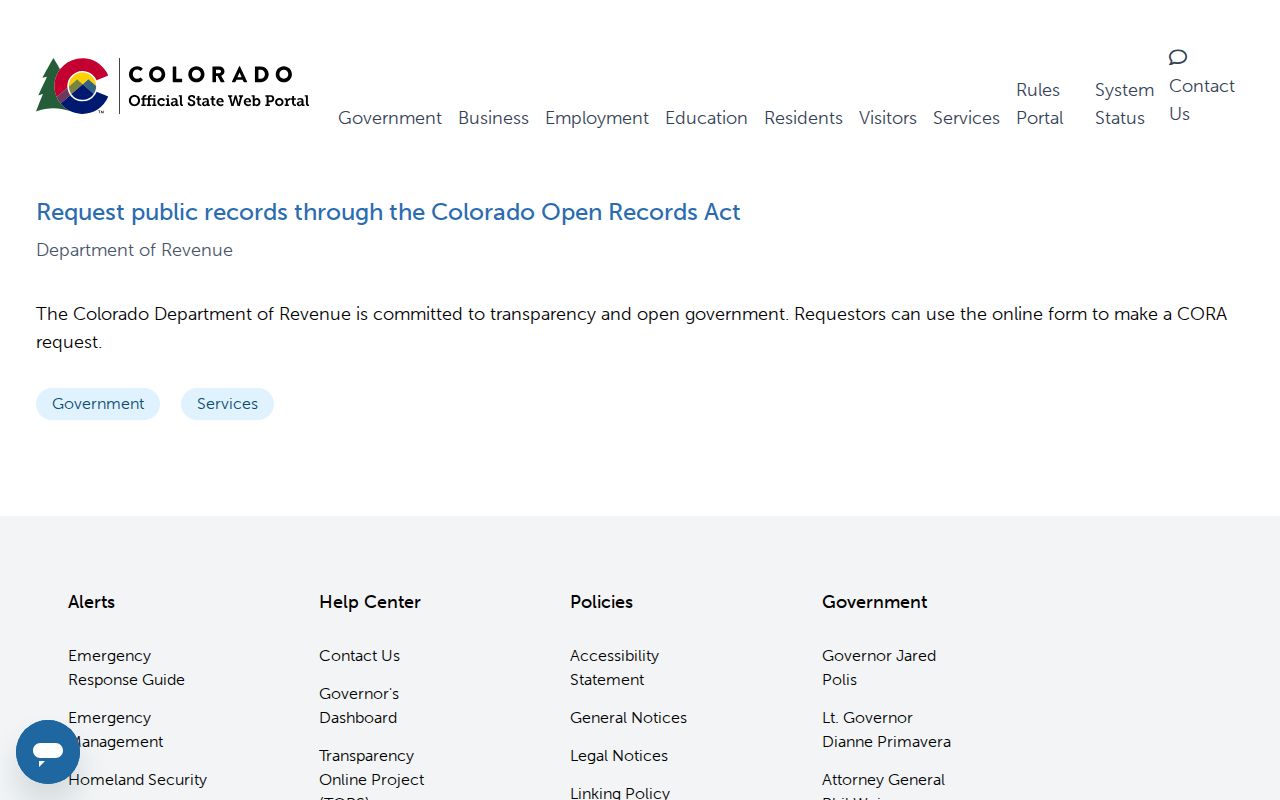
Criminal-justice records still require attention to CCJRA and the actual agency custodian.
Colorado Release Records Law
Colorado separates general public records from criminal-justice records. The Colorado Open Records Act, C.R.S. §§ 24-72-200.1 through 206, governs general records. The Colorado Criminal Justice Records Act, C.R.S. §§ 24-72-301 through 309, governs criminal-justice records. CCJRA generally makes records of “official action” open while allowing more discretion and exemptions for other criminal-justice material.
Official action matters: C.R.S. § 24-72-302(7) expressly includes arrest, charging, disposition, release from custody, judicial conditions, and decisions on probation or parole.
That rule supports a focused request for the release or parole action. It does not turn medical, disciplinary, investigative, victim, or full corrections files into open records. A CCJRA request also needs the statutory statement that records will not be used for direct solicitation for pecuniary gain. CORA’s general timing rule is often three working days, with up to seven more for extenuating circumstances, but that is not a promised turnaround for every criminal-justice custodian.
The records law also explains why a short official-action response may be the best answer. A custodian can confirm the release decision, date, conditions, or parole action without opening unrelated parts of the file. Ask for the smallest record that proves the point. If a denial or redaction cites an exemption, read the response before filing a wider request. County sheriffs, CDOC, courts, and parole officials may each own a different part of the same custody history.
Sealing, confidentiality rules, and custodian decisions can affect access. A pardon is also different from sealing, expungement, release, or sentence discharge. Verify which legal event actually occurred before drawing a conclusion from a short portal entry.
Colorado Booking Photo Release Law
Colorado’s records law treats a booking photograph as an image taken by a criminal-justice agency after arrest or detention and before conviction. C.R.S. § 24-72-305.5 does not create a blanket rule that every booking image is confidential. Instead, it targets the pay-to-remove model. A requester may not obtain a booking photograph while knowing both that it will be published and that removal will require a fee or another payment.
The requester must certify against that use, and a custodian may accept one statement for multiple requests for up to one year. A violation or false statement is an unclassified misdemeanor with a fine of up to $1,000. The official Colorado statute collection supplies the current statutory text. This rule concerns access and misuse of booking images. It does not prove a person’s release, erase an arrest record, or replace the official release action held by the jail or court.
Colorado Release Trends
CDOC’s FY 2024 Statistical Report gives dated statewide context, not a current roster. It recorded 6,217 inmate releases in FY 2024, up from 5,888 in FY 2023, a 5.6% rise. Parole accounted for 86.5% of FY 2024 releases. Sentence discharge made up 11.9%, and other release types made up 1.5%. The average jurisdictional population was 26,732, split between 17,362 inmates and 9,370 parolees.
These counts measure CDOC’s state system. They do not include every person released from Colorado’s county jails, BOP sites, or immigration detention. CDOC also reports that prison releases often pass through transport hubs, so it does not attribute the release totals to individual prisons. The Colorado Facility Directory identifies the researched sites without implying that each front gate is the actual processing point.
Find Colorado Released Inmates
Start with the last known custodian. A current county roster is useful for someone still held there, but the person usually drops off after release or transfer. If the person served a Colorado state-prison sentence, use the CDOC offender search. If the event was a local arrest, bond, dismissal, or county sentence, use the releasing sheriff and the Colorado County Directory. A person can appear in both systems at different stages, so dates and agency identifiers matter.
- Decide whether the last known custody was county, CDOC, federal, or ICE.
- Use a DOC number or other agency identifier when one is known.
- Compare the name, photograph, physical details, conviction, and case information before selecting a match.
- Read the exact assignment, event, and date labels without turning an estimate into a fact.
- Check the court disposition or request the official release action when the portal is unclear.
Important: Roster disappearance is not proof of community release. The person may have transferred, entered CDOC, moved under a detainer, or changed custody systems.
The CDOC Offender Search provides the live state-prison and parole search form.
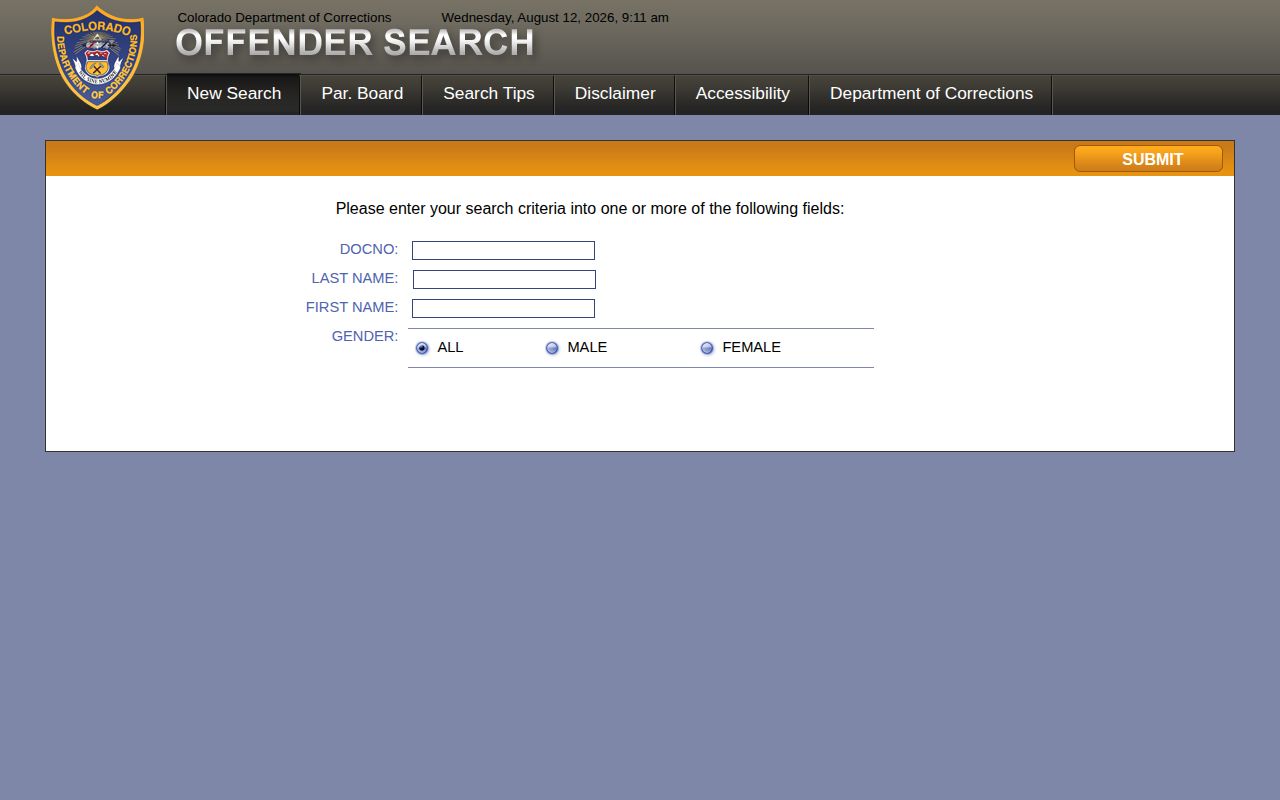
A match should be checked through its DOC number, assignment, estimated dates, and conviction details.
Colorado Release Hearing Records
The Colorado State Board of Parole handles application, rescission, and revocation matters for people within the state parole system. An application hearing considers release after parole eligibility. A rescission hearing reviews a granted release date after a later concern. A revocation hearing concerns an alleged violation after prison release. None of those is the normal route for a county bond release.
The Colorado State Board of Parole home page identifies the statewide release-decision agency.
Its annual reports give aggregate decisions and workload, while person-specific review begins with CDOC and the live calendar.
The live Colorado Parole Board calendar lists scheduled hearing events.
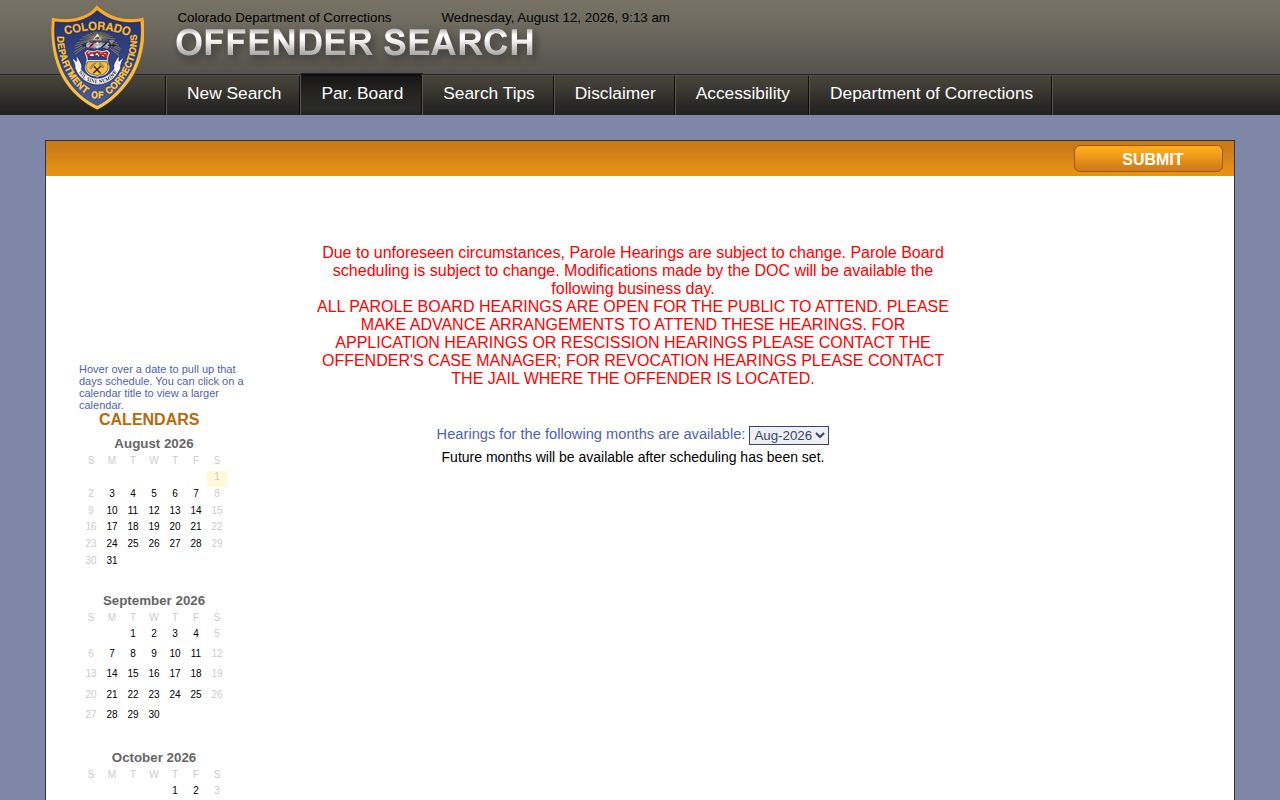
Schedules can change, and DOC modifications may not appear until the next business day.
Colorado Release Search Channels
Colorado VINE is chiefly a participating local-jail notification channel. CDOC does not feed its prison custody data to Colorado VINE because it maintains a separate victim-notification system. County coverage and timing vary, and no current authoritative county-by-county participation list was found. A VINELink no-match therefore cannot prove release.
The VINELink Colorado selection and search interface begins a participating-jail custody check.
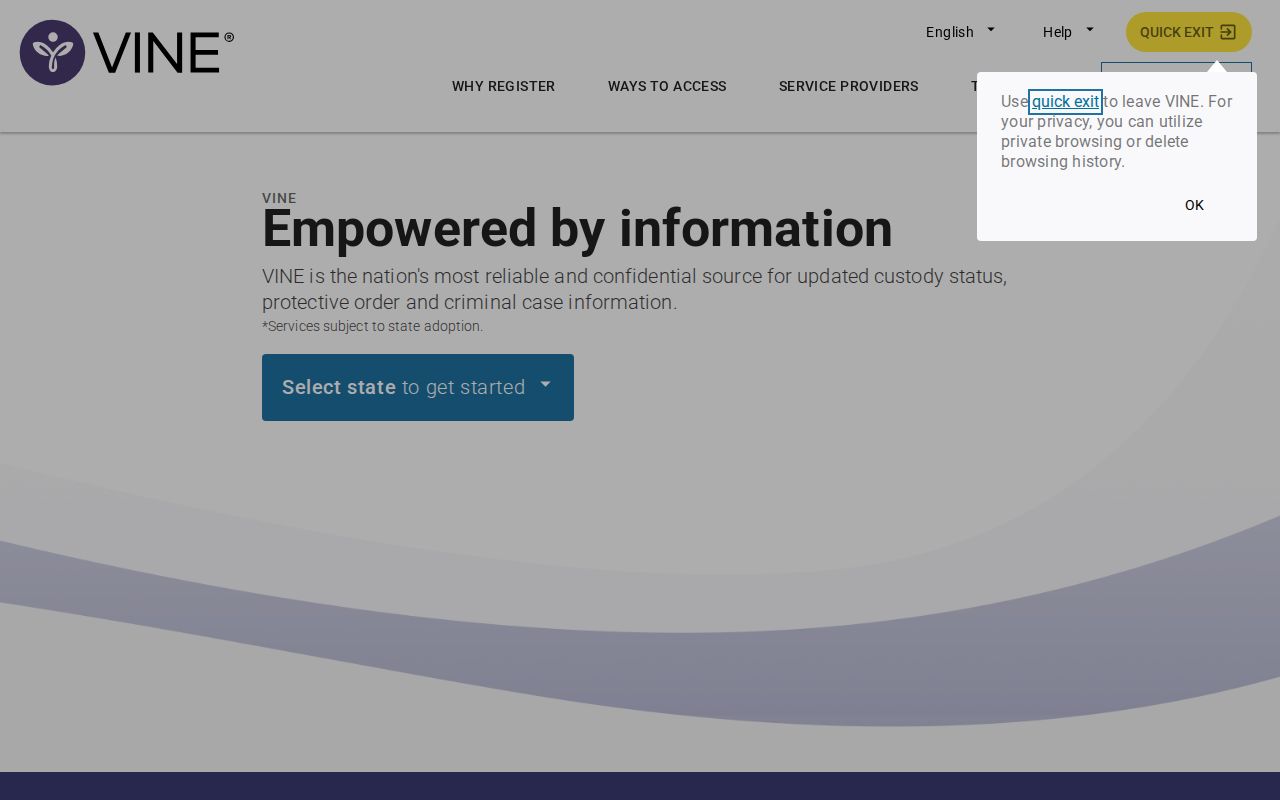
After opening the correct agency record, available notification choices may include phone, email, or text.
Federal prison requires the BOP Inmate Locator, which can show a release date and “RELEASED” or “Not in BOP Custody.” Those phrases end only BOP custody. They do not rule out another jurisdiction or supervision.
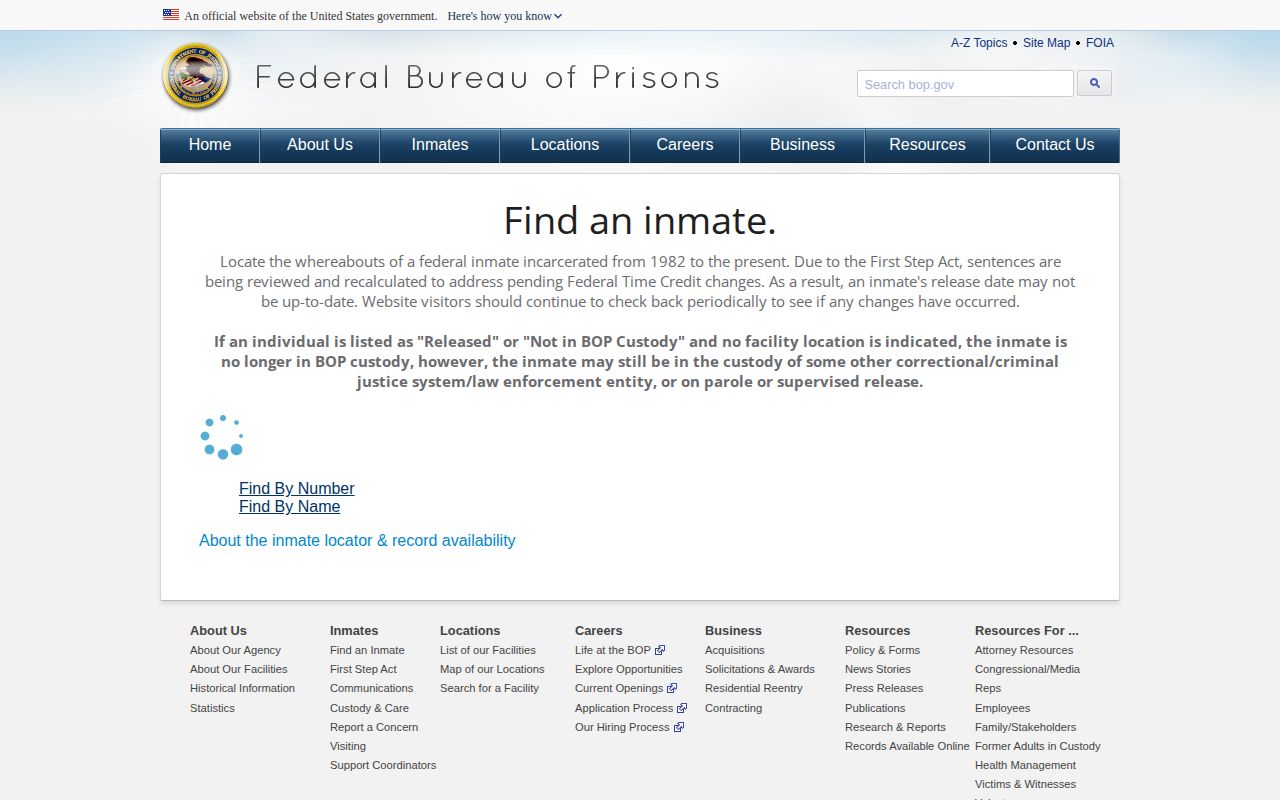
BOP results cover people released after 1982 and are updated daily, though recalculation can affect a displayed date.
ICE’s ODLS is for current ICE custody or longer CBP custody, not a historical release archive. A no-result does not prove release, removal, or transfer. Search by A-number and country of birth when possible, or by exact name and country of birth. Children under 18 do not appear.
Note: A blank result proves little until the correct local, state, federal, or immigration system has been checked.
Colorado County Release Paths
Colorado’s 64 counties do not publish one uniform release feed. County research shows named jails with online rosters, brief holding sites followed by transport, and counties that rely on a regional receiving jail. Bent, Fremont, Moffat, and Montrose facilities appear in neighboring-county custody paths. A local record can end because of release, transfer, a contract move, or commitment to CDOC.
| Last setting | Best first source | What absence means |
|---|---|---|
| County jail | Sheriff release record and court file | Release or transfer remains possible |
| CDOC prison | CDOC offender search and records request | A blank result is inconclusive |
| Community corrections | Program or supervising agency, subject to privacy limits | No public location does not prove unrestricted release |
| Federal or ICE | BOP or ICE system | One agency’s no-result does not resolve another agency |
Community corrections, work release, and alternative sentencing sit between simple “in” and “out” labels. A guarded hospital room, court holding room, police short-hold area, or transport path is not a long-term roster jail. The statewide facility directory preserves those type labels so a reader does not mistake a route or historical site for active custody.
Physical location also controls how the statewide directory avoids duplicates. Aurora ICE is listed under Adams County even when another locality’s research refers to it. Bent County Jail may receive people from nearby counties, but the facility remains a Bent County record source. The same rule keeps Sterling in Logan County and the Montrose and Moffat receiving facilities in their home counties. A sending sheriff may document the transfer, while the receiving facility holds the next custody record.
Note: Follow the physical custodian and the custody date, since a neighboring county may hold the person under contract.
Colorado Release Court Records
A court file can explain why someone left a jail roster. Bond, dismissal, sentence, probation, remand, and transfer may all appear through the case. Colorado Judicial offers a free docket search, but it does not provide a free statewide portal for full trial-court documents. The records guide sends real-time register-of-actions searches to fee-based vendors and warns that those results are not the official court record and may omit cases.
The free Colorado Judicial docket search locates scheduled entries by place, date, and another filter.
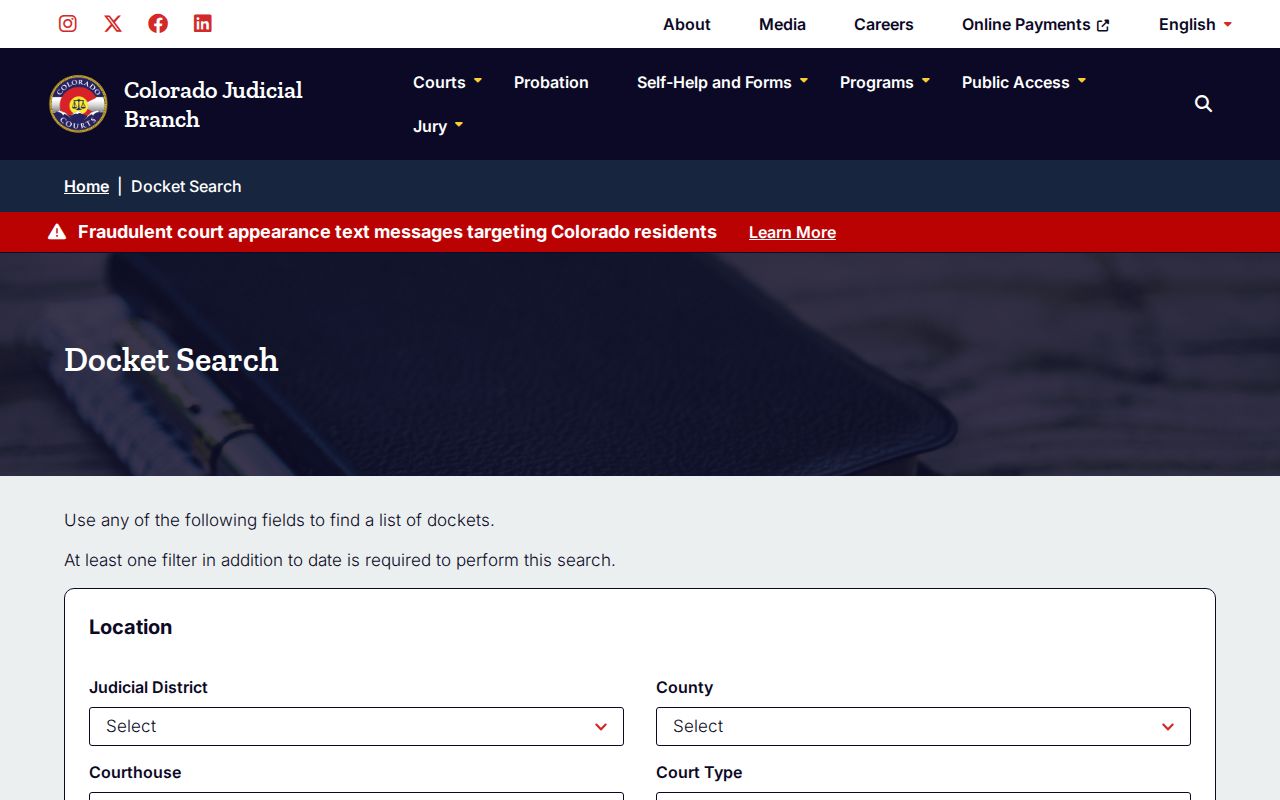
A docket event may guide the search, but the filed order or disposition must come from the court.
Probation is also a Judicial function, not CDOC parole. Colorado has no reliable public statewide probationer roster. A disposition can show that probation was ordered, while the correct district probation office handles present verification under its disclosure rules. Court information explains legal action; it does not by itself prove where a person is now.
Colorado Clemency Release Records
The Colorado Constitution gives the governor authority over post-conviction reprieves, commutations, and pardons, except in treason and impeachment matters. A commutation can change a sentence. A pardon has a different effect and is not the same as a release record, sentence discharge, sealing, or expungement. The advisory board reviews and recommends, but the governor makes the decision.
Colorado’s “C” executive-order series creates a year-by-year public trail. On December 20, 2024, Governor Jared Polis announced 22 pardons and four commutations. Those dated executive records can confirm that a clemency act occurred. They should then be read with the court and custody records to determine what changed for the person.
Colorado Release Reentry Services
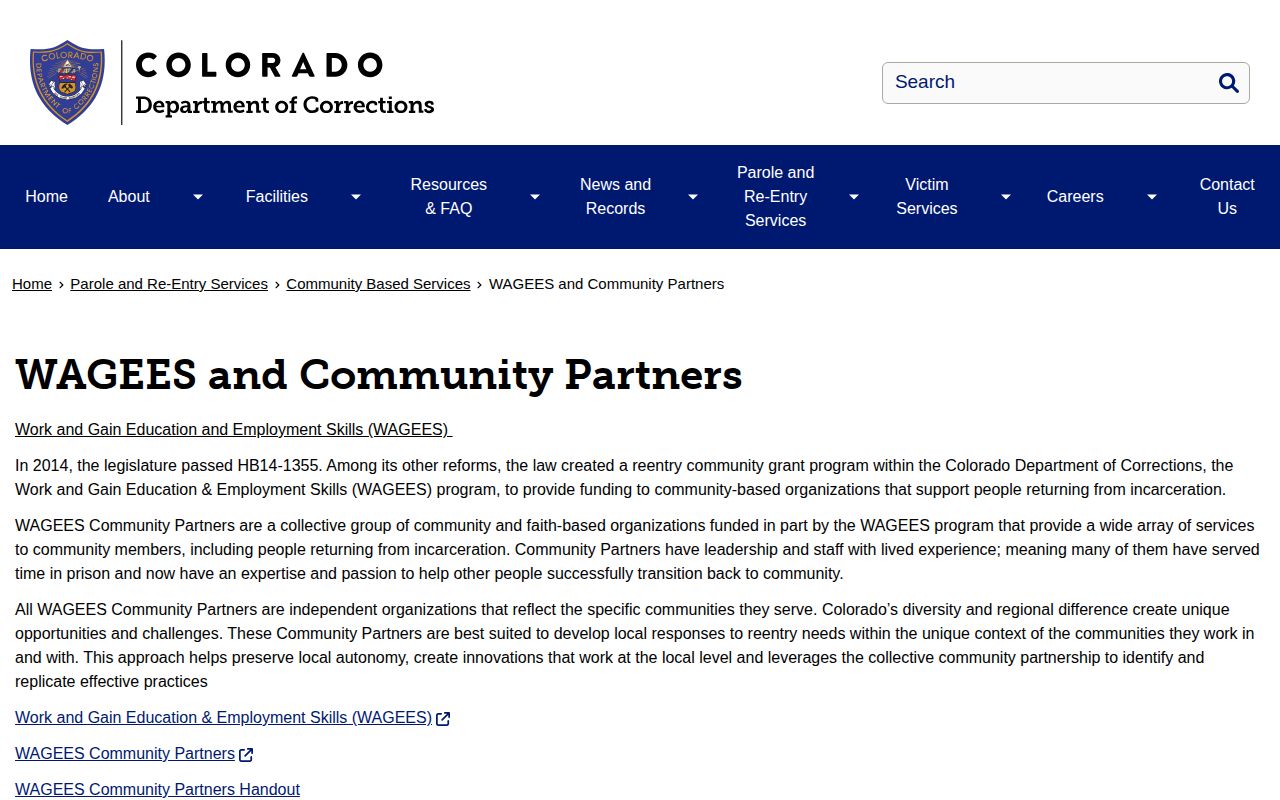
Colorado’s WAGEES reentry program grew from HB 14-1355. CDOC funds community and faith partners that serve people returning from incarceration, with an emphasis on local control and leadership informed by lived experience. It is a navigation and support network, not a custody-status database.
The CDOC WAGEES partner page lists the statewide reentry program and its community approach.
Program contact does not replace a CDOC profile, parole record, or official release record.
CDOC’s Treatment Coordination Case Managers separately state a goal of arranging assessment and intake referrals within 14 days of release for qualifying people with specified treatment needs. That timing describes program coordination. It does not establish the legal release date, custody status, or sentence endpoint.